

Folding Paper Cranes and Creating TEAACH Act Resources- June Ahleman, BFA Painting ’27
Hi everyone!! I’m excited to share about a workshop I facilitated, as well as some updates on an educational toolkit, calendar, and art-specific resource to support the TEAACH Act.
Cranes for Peace
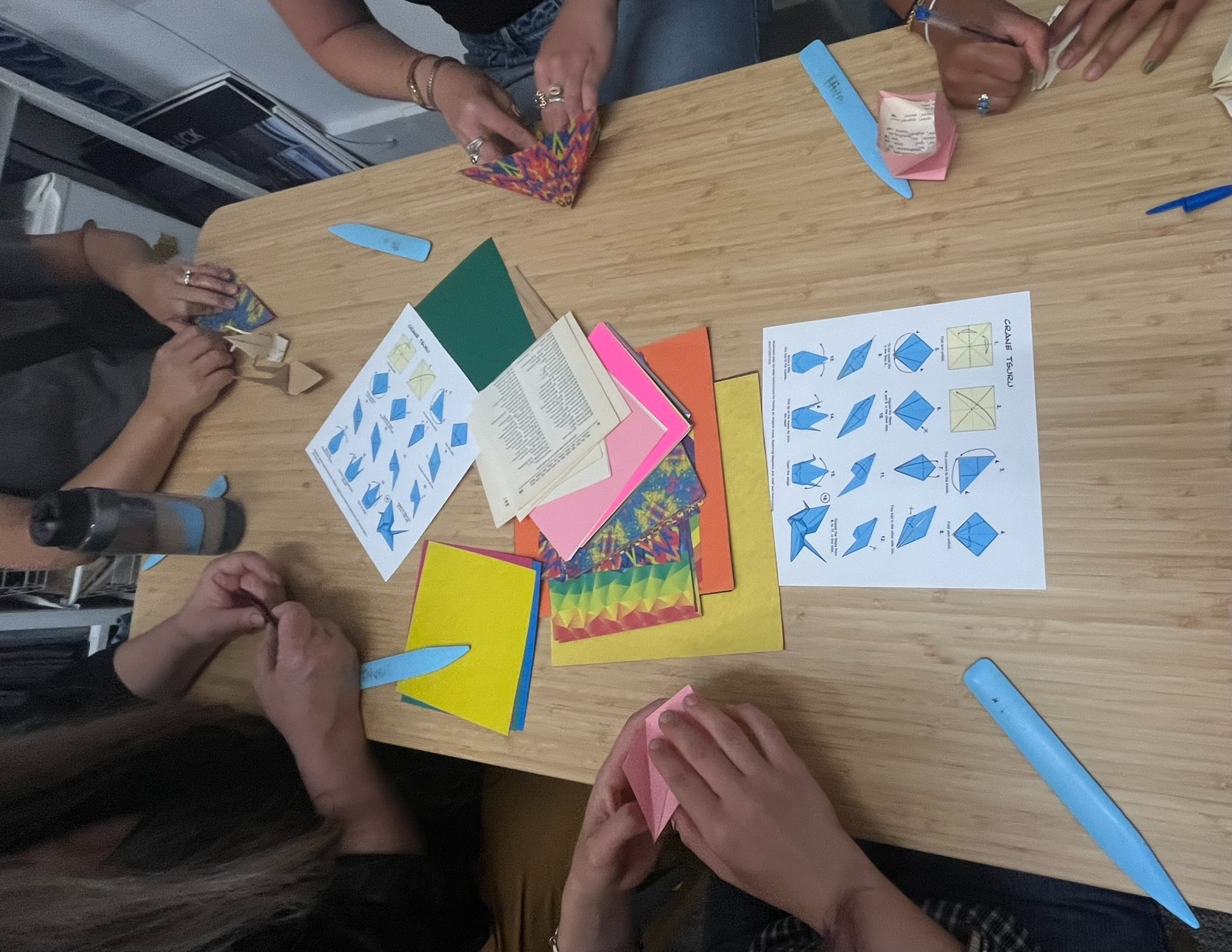
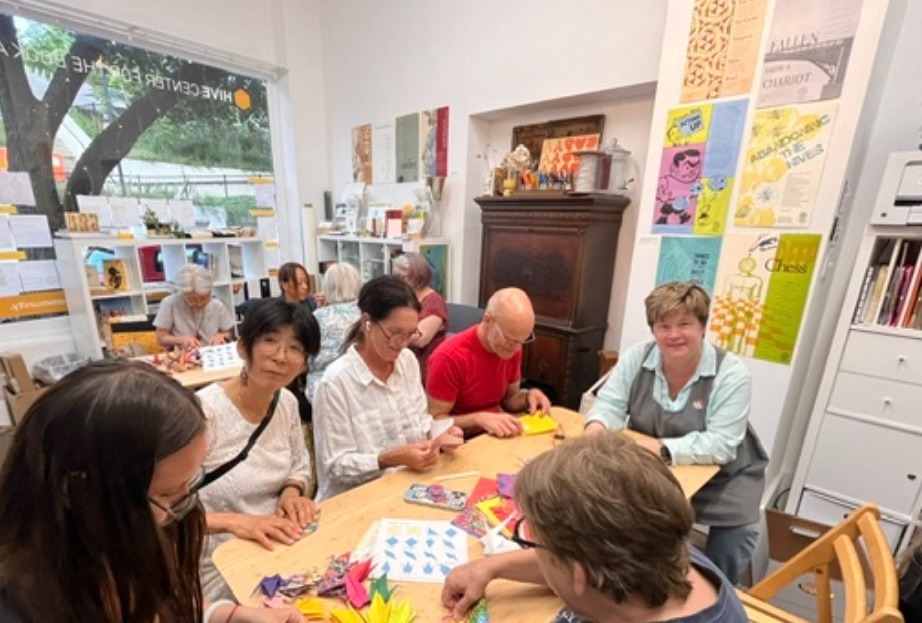
Since my last post, I facilitated another workshop! This was a workshop for EASPA in collaboration with The Japanese Cultural Center of Chicago and The Osaka Committee of Chicago Sister Cities International at the Hive Center For The Book Arts. The cranes produced from this workshop, as well as many others throughout Chicago, will be installed together in a cultural institution such as the The Obama Center (omg!) or the Historic Water Tower in 2027. This workshop was super well attended and cultivated many interesting conversations about cultural exchange both locally and across countries. It was an incredible experience leading a workshop within such a large scale project across so many organizations, and I’m so excited to see the installation next year!


TEAACH (Teaching Equitable Asian American Community History)
Now that we are through July and most of EASPA’s cultural programming for the summer is complete, I’ve been able to dial in on the TEAACH act more extensively. This includes creating an educational toolkit template for EASPA to utilize in the future, a calendar of Asian American historical events and holidays, as well as an art specific resource! The art specific educational resource is a catalogue of Asian and Asian American Artists paired with related TEAACH Act resources and requirements. The first two pages are attached below!


I’ve been having so much fun putting this resource together; I really enjoy drawing connections between historical events and artists! It’s especially exciting to organize this information in a resource that can be utilized in both arts and social studies contexts. I recently had a great conversation with Melissa Molitor, the Founding Director of EASPA, about the importance of not only teaching Asian American history but also helping people understand how it connects to current questions of identity, belonging, and social and political issues. An example of this is how the United States vs. Wong Kim Ark case serves as the foundational legal precedent for birthright citizenship in the United States. Wong Kim Ark’s story is important not only because it is part of America’s past but because it is a big part of America’s present. On that note I want to shout out Karen Hu, another 2026 Maharam Fellow who’s working directly to support immigrants with Alliance to Mobilize Our Resistance (AMOR).
My favorite quality of art is its ability to mediate and navigate multiple theories, histories, and modes of being at once. This conversation with Melissa about past and present, external experiences and internal thought reminded me of what I love most about art and how it can be helpful in historical and educational contexts. I’m excited to provide more perspectives on how AAPI history can be taught and understood through this resource!!
I also want to note that I took an amazing course at RISD last semester called The Kinship of Repair: Asian/Asian American Art of Collaboration taught by Jung Joon Lee that has not only informed how I approach the community and research work I’ve engaged with this summer but also given me many great Asian American artists to add to this resource so thank you Joon!!
I will spend my last week with EASPA completing the educational resources mentioned in this post!!