

Reflecting on Educational Resources and Community Engagement Initiatives- June Ahleman, BFA Painting ’27
Working with EASPA this summer has taught me so much about community centered work, collaboration across non profit organizations, and cultural programming generally! For this last blog post I thought I would go over different projects I supported and some of the main things I learned from each!
TEAACH ACT Resources
The TEAACH Act (Teaching Equitable Asian American Community History) is an Illinois act passed in 2021 that mandates that all public elementary and high schools in the state teach a unit of curriculum on the history and contributions of Asian Americans.
In my last few weeks with EASPA I continued to create an arts resource to support the TEAACH Act, as well as an AAPI Calendar for future educational toolkits. This seventeen page resource has been super exciting to put together and very interesting from a curatorial perspective. My Theory and History of Art and Design concentration has definitely prepared me for the task of making connections among artists, historical events, and TEAACH requirements. Including professors and peers I admire was another really exciting part of creating this resource! RISD affiliated artists mentioned in the resource include professors Susanna Koetter, Tsai Ling Tseng, and Timothy Lai as well as students and alumni such as Paree Rohera, Katherine Tae Hee Lee, Talha Shams and many others!!


Other TEAACH work I contributed to this summer included creating a template for a future EASPA educational toolkit, cataloging existing resources, synthesizing those resources with materials in EASPA’s historical archive, and creating an AAPI booklist for future projects.
These projects taught me a lot about how I can use my perspective as an artist to contribute to initiatives that do not directly involve art but would benefit from examples of lived experiences and different points of view. I want to thank Melissa Molitor the Founding Director of EASPA for encouraging me to initiate my own project within the organization and offering insight with things like citations and how dense the included information should be!!
Through organizing resources and familiarizing myself with EASPA’s historical archive I also learned a lot about the history of different AAPI communities in Evanston and Chicago!
Community Events and Cultural Programming
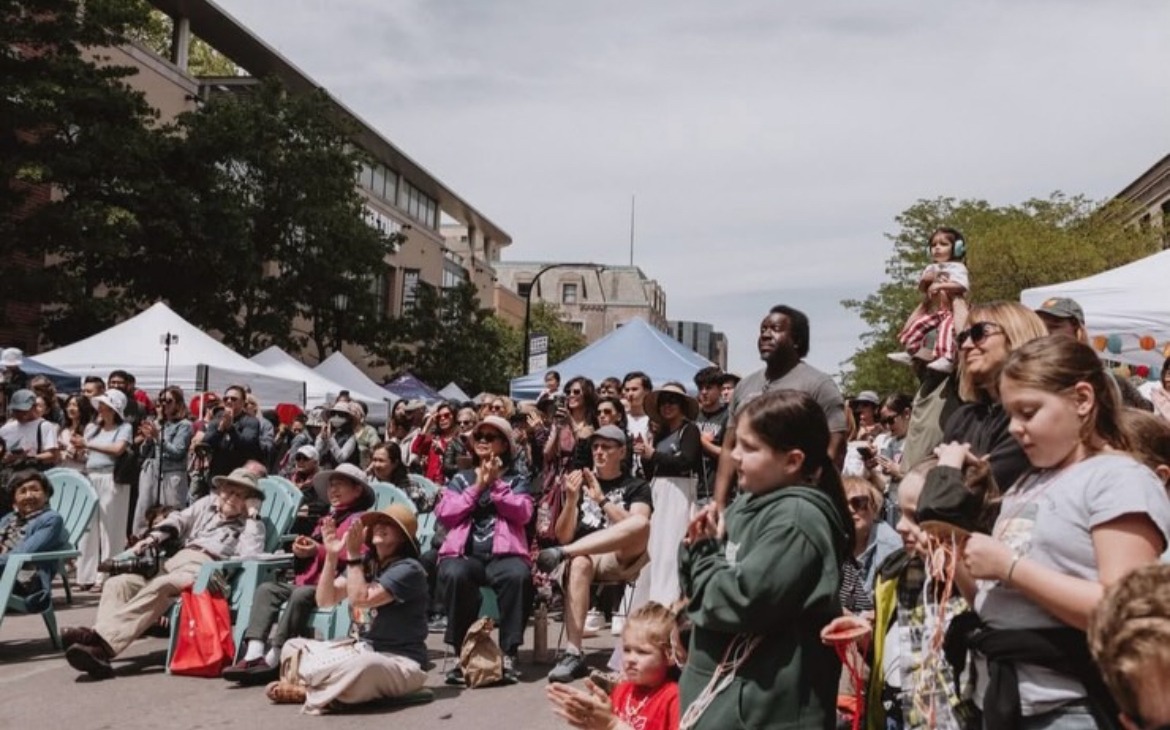
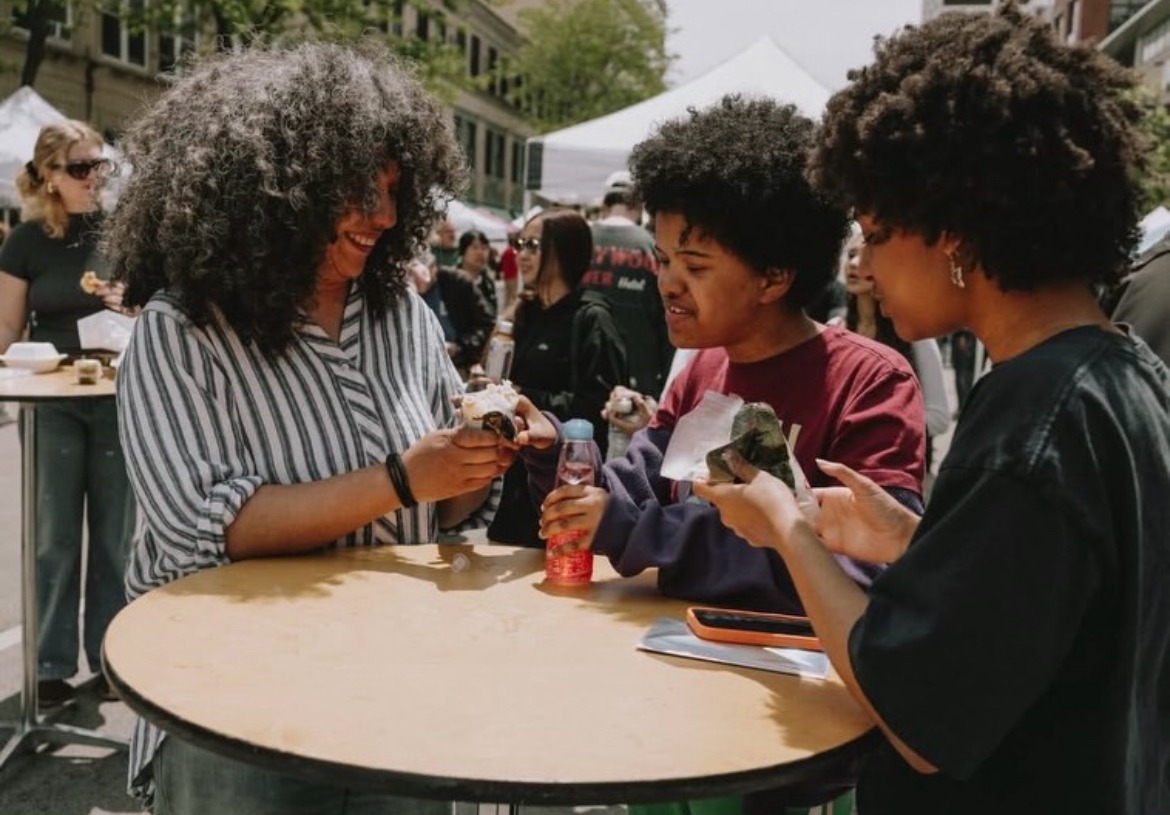
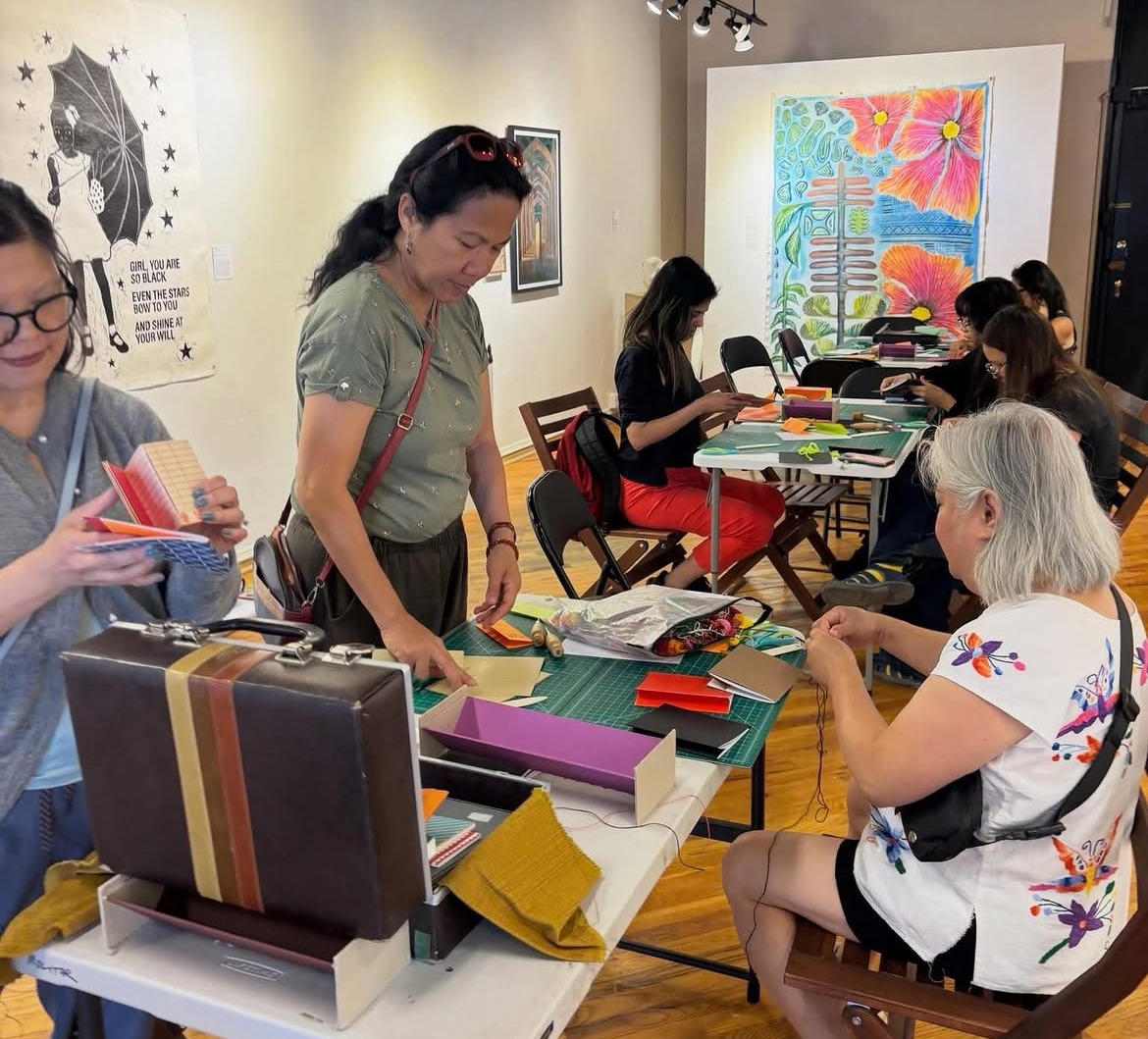
In addition to work supporting the TEAACH act, I was able to contribute to multiple great community events! These included facilitating arts workshops, supporting the annual Umbrella Festival, installing and staffing an exhibition called In The Absence of Space, and supporting community events in the exhibition space! I have always loved meeting people, hearing their stories and asking questions so programs like these were very fulfilling to participate in!
I would say the main thing that was re- affirmed through these projects would be that curiosity is really important and people are usually interested in telling you about their experiences if you ask the right questions and listen! Especially as an rising senior, I enjoyed taking these community events as an opportunity to ask about different paths people have taken in their lives and careers; it’s been awesome to hear so many assorted and multigenerational perspectives!
Finally, I learned that people are often more comfortable talking when making something with their hands. Facilitating arts workshops created many opportunities for interesting conversation!
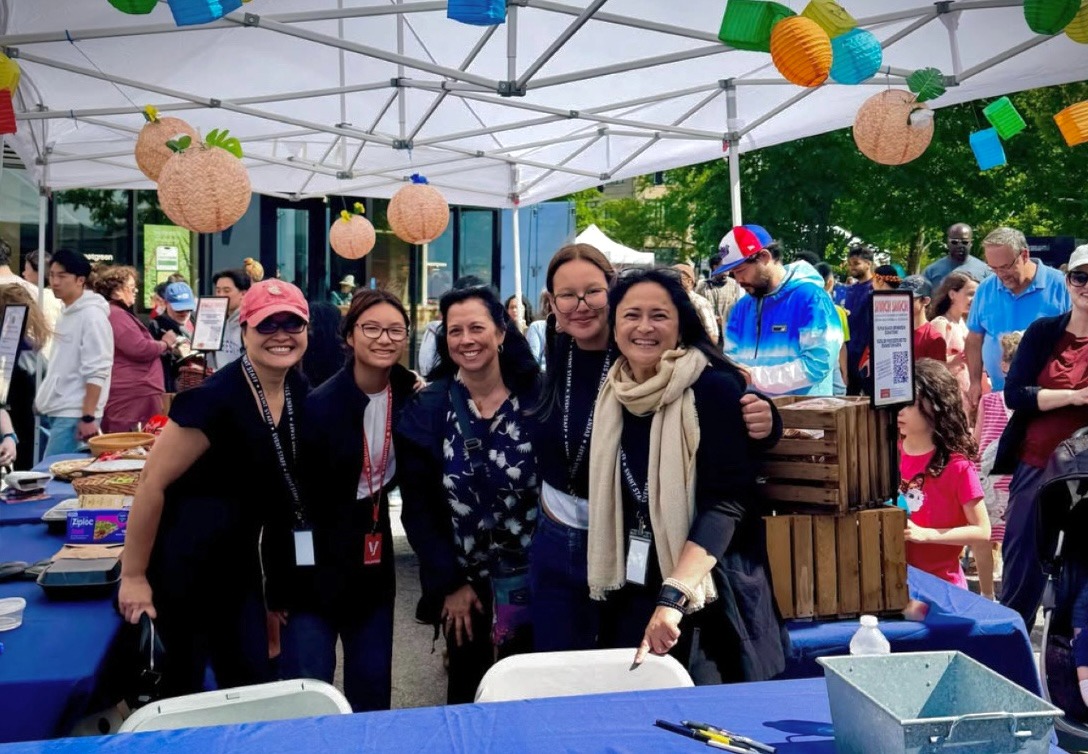
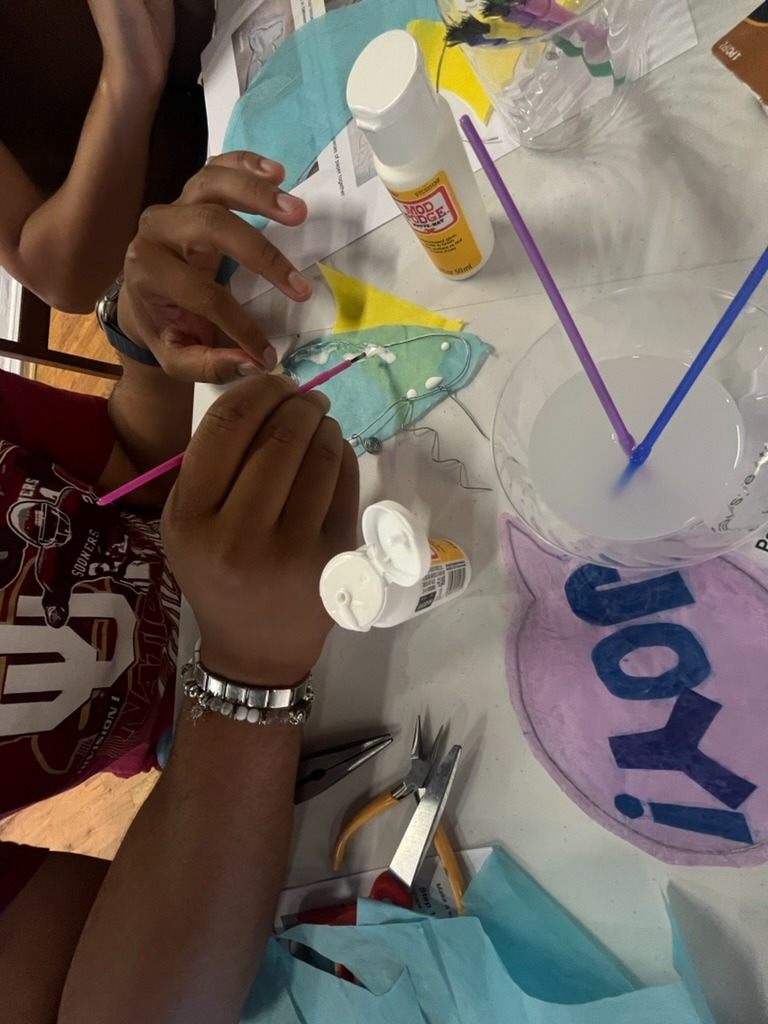
Regardless of where my career takes me after graduation this year, I know that three things I did this summer will be part of my life and creative practice in the future: asking questions, connecting people, and of course, creating. I encourage you all to be more curious, invest time in communities you care about, and definitely make something!!
Thank you to Melissa Molitor, Abby Mendoza, Amy Kung, and everyone at EASPA for being so welcoming! Thanks to Kevin Jankowski at RISD for being a great advisor throughout this experience! Thanks to Scott Malloy at the RISD career center for telling me about this fellowship! And of course, thanks to Maharam for this opportunity to invest so much time in an initiative I care about!!
Art Build for the Movement for Immigrant Justice and an End to ICE Violence – Karen Hu, MFA Printmaking ’27
For the past weeks, I have been working with Alliance to Mobilize Our Resistance (AMOR), an organization located in Providence, Rhode Island. AMOR’s mission is to root out state violence, empowering people impacted by detention, deportation, police violence, and state sponsored abuse. AMOR is a community organization that advocates for the targeted members of our communities and creates safe, healing, accessible, and empowering community spaces. Working closely with Cata, the Executive Director at AMOR, I had been working on developing an art build and making print materials that could support AMOR’s future art builds and movement.
The intention of the art build was to create a space for making our shared vision together through an evening making art with neighbors, volunteers, and friends in the movement for immigrant justice and freedom from state violence. We created a banner and prints that would be shared to strengthen the voice of our movement in protests, actions, and events. The banner was a large banner, and many hands made it possible to paint within a couple hours!

Before the event, I drew out the banner and mixed the inks. It was really important to honor the previous banner which had been lost due to all the times it switched hands between rallies, events, and more. Organizers at AMOR and I had many conversations about the colors, font sizes, and the details of the figures that made the most sense for the intention that the banner would be used for. It was both challenging and insightful to find the balance in approachable aesthetic and principled design choices to further the movement.

This experience so far has really imbued in me a respect for the long-term planning and vision of organizations fighting for immigrants justice. The planning of an event does not occur just for the single event, as folks are always considering how the event might also speak to the larger movement nationally/internationally or contribute to the movement in the coming months and years. The experience learning from AMOR has given me clarity on the fact that systematic social change does not happen without systematically building capacity for the ongoing movement.
ATW80F Pop-Up Exhibition — Alyssa Gorman, BFA Textiles ’28
In the last month, my work with Around the World in 80 Fabrics has consisted of remotely brainstorming for the Pop-Up Exhibition. ATW80F has a book on sustainable textiles and the future of fabrication coming out this year. As an intern, I’ve been working with Carroll to develop a traveling mobile exhibition with some of the collection’s most beautiful pieces, all with incredible stories to tell. The exhibition will be housed in a suitcase, and will consist of a series of textiles accompanied by storytelling cards. My role has been to create engaging cards with the “metadata” ATW80F has collected on each piece. I’ll share a little bit of my process from the last few weeks in this blog! Next week, I return to New Mexico to organize the collection in person, and I’ll be able to share more.
Because the traveling exhibition only includes a selection of the total number of fabrics in the collection, I’ve had the opportunity to learn a lot about each piece! For each textile, the goal is that a viewer will be able to understand the ecological and regional origin, the artist’s narrative, the environmental significance, and the cultural value. Below are two examples of informational cards I’ve designed to accompany the pieces. Around 20 fabrics will be included in the traveling showcase.


The cards are intended to serve as storytelling tools. The ATW80F collection is both a physical materials library of sustainable alternatives to petroleum based fabrics AND a rich archive of cultural heritage and disappearing textile techniques. I’m thrilled to be able to assist with the development of the Pop-Up as a tool for spreading these stories. I’ll include some drawings below of how the cards are intended to work within the exhibit.


Next week, I’m super excited to share more about my second trip to New Mexico! I’ll be back in Santa Fe with the collection, working with Carroll and Lesli to curate and organize every piece. We’ll also be putting together the Pop-Up and I’ll be able to share more progress.
The Lung – Stephanie Van Riet, MFA Sculpture ‘26
As an artist at Biosphere 2, I am grappling with many truths and complexities within the research and facility. Also within a larger scope, with the scientific and cultural of space exploration. Curious about the internal organs of this place, I consider how they function together, and how I can use my artistic training to visualize the invisible arteries. Since arriving at Biosphere 2, I have been mesmerized by a “floating” aluminum disc in a circular room – this room is referred to as “the lung.” To get to the lung from the biomes, you must walk through a long sloped tunnel that opens into the neoprene-scented room, bringing into view a forty-thousand pound aluminum disc which is suspended by hypalon over a seventy-foot diameter circular pool. The hovering disc moves up and down, regulating the atmospheric pressure of the whole facility. During the initial experiment in 1991, two “lungs” (south and west lung) were critical to control the atmospheric pressure of the biomes while the facility was sealed for two years. Today, only the south lung is in operation.


Left: close up of interior lung. Right: exterior lung, encased by a geodesic dome
In my first week at Biosphere 2, I was struck by the scale of the room and its acoustic resonance; it feels cavernous, yet claustrophobic. There is something haunting about this futuristic space – perhaps it is the emptiness, or the chorus of echoes when the slightest sound is created. After spending time exploring reflections, light and sound, I decided to create a projection to activate the wall and pool within the lung. Though there are no windows to the outside environment and no potential for animal or plant life, the lung it is vital to the functioning of all the living spaces and beings within the facility.

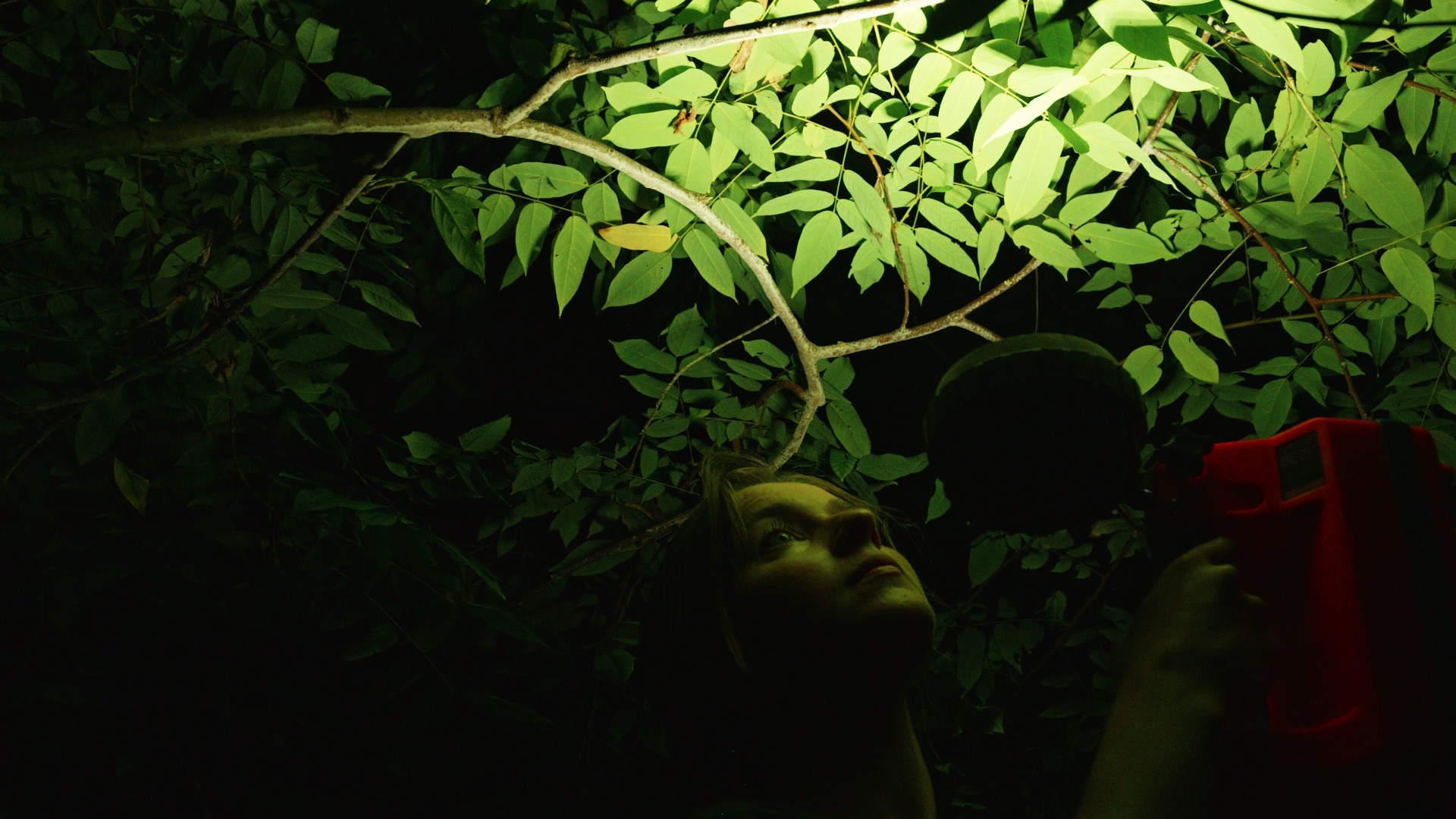
Tracking the sap flow within the cacao trees of the rainforest biome is an ongoing research initiative in Biosphere 2. Due to the cacao tree’s cultural significance and economic value, it is of interest to many to understand how it is affected by climate change. Using sensors throughout the tree, Biosphere 2 scientists are tracking the velocity at which the sap flows from the roots to the branches of these trees. To visualize and animate the unseen data, I have been collaborating with Devin Bayly, Data Visualization Analyst at the University of Arizona. We have been converting data sets into particle flow animations and tree renders, which I have overlayed and stitched together into a video that illuminates with the cadence of my own breath. I also sought the help of Aaron Bugaj, Media Producer for Biosphere 2, to film a performance within the rainforest at night. It was interesting to see this space in the dark, lit only by flashlight – a reminder that while the facility was closed, the biomes are still alive and active.
Making sense of the Puzzle – Mahrukh Khizar Printmaking’ 27
In the second week, I began moving from research into the design process. Coming from a printmaking background, I have always felt comfortable thinking through images, composition, and visual language, but I was less confident with the technical side of design software. Instead of letting that become a limitation, I returned to the way I naturally work with sketches, notes, and ideas on paper. I began exploring possible cover images, titles, and ways of visually communicating the information we had gathered.
As I worked through these ideas, I found myself thinking back to my own first experience of menstruation. Through conversations with the women on the team, I also began reflecting on how confusing those early conversations around periods can be. If you understand that menstrual blood comes from the vagina, it can still take much longer to understand its connection to puberty, fertility, pregnancy, and the reproductive system. All of these connections are important for young people to understand, but they are often introduced as separate pieces of information. I wanted the zine to bring those pieces together in a way that felt simple and approachable.
This became the starting point for the title The Period Puzzle. I began imagining the shape of a menstrual pad as a puzzle piece, while also exploring the different shapes and sizes of pads designed for different flows and needs. The puzzle became both a visual concept and a metaphor for the project: taking information that can feel fragmented and bringing the pieces together into something clearer and easier to understand.


At the same time, I was learning that accessibility had to be considered from the very beginning of the design process rather than added as an afterthought. I began researching how the zine could communicate with people who might not be able to access conventional printed text or imagery. I explored the use of QR codes that could link to videos explaining menstrual information in sign language, as well as audio recordings that could be accessed by readers with visual impairments. I also began researching Braille, including the differences and possibilities for both English and Urdu readers. This opened up a whole new layer of thinking for me: accessibility was not simply about making the same information available in another format, but about considering how different people experience, process, and interact with information.
The more I researched, the more I realized that the design of The Period Puzzle needed to be flexible. It had to work not only as a printed object, but as something that could connect to sound, video, touch, and other forms of communication. This became an important part of how I approached the project in the weeks that followed.
Conjuros y ebriedades: Cantos de mujeres mayas, Incantations – Jessie Kanji MFA Print 27′
July 1
The mayans word for book, Jun or vun also means paper, and the making of paper it a critical Mesoamerican tradition. The ancient Mayan god Itzamná is said to have created the invention of writing.
Long before the arrival of Europeans, Maya scribes created extraordinary codices from bark paper coated with fine layers of lime plaster, producing smooth pages that could be folded accordion-style into books. These manuscripts produced while only native people inhabited the land recorded astronomy, mathematics, history, ritual calendars, medicine, and genealogy, reflecting one of the most sophisticated systems of knowledge in the Americas. Writing itself was considered a sacred practice, closely associated with the deity Itzamná, who is credited in Maya tradition with the gifts of writing, knowledge, and calendrical wisdom.


Paper also held an important ceremonial role. During certain rituals, blood drawn from the tongue or ears was absorbed into strips of bark paper before being burned as an offering. As the paper transformed into smoke, prayers and messages were believed to pass to the gods. The material itself acted as a bridge between worlds—a vessel capable of carrying both words and spirit.
Much of this knowledge was violently interrupted during the Spanish conquest. In 1562, Bishop Diego de Landa ordered the destruction of countless Maya books, declaring that they contained “nothing but superstition and lies.” Today, only four pre-Columbian Maya codices are generally recognised as surviving. The loss represents one of the greatest acts of cultural destruction in the history of the Americas.
Working at Taller Leñateros has transformed the way I think about paper and books. The workshop is not simply producing handmade paper or artist books; it is participating in the continuation of a tradition whose roots extend back more than a thousand years. Through papermaking, printmaking, storytelling, and publishing in Indigenous languages, the collective creates works that honour Maya knowledge while speaking to contemporary realities. Their books are not replicas of the ancient codices, but they share the same understanding that a book can be far more than an object—it can be a keeper of memory, language, identity, and resistance. Incantations by Mayan Women is the first book Mayan people created that was written, illustrated, printed and bound in paper of their own making in nearly five hundred years.


At a time when many traditional craft practices are increasingly vulnerable to economic pressures, the work of Taller Leñateros feels profoundly important. Each sheet of handmade paper and every libro objeto they produce carries forward a lineage that colonialism attempted to erase. To support this work is not only to preserve a craft tradition, but to ensure that Indigenous ways of making, remembering, and telling stories continue to evolve for future generations.


Entering the conversation – Mahrukh Khizar MFA Printmaking’ 27
My first week with Mahwari Justice began with a series of WhatsApp groups, introductions, and video calls. I was connected with the wider team by Faiqa, the Media and Communications Director and a young period activist, as well as Bushra Mahnoor, my supervisor. I also met several of the other interns, many of whom were young women based in Lahore, artists, creatives, and students who had come together because they wanted to contribute meaningfully to the organisation’s work.


What struck me almost immediately was how openly everyone spoke about menstruation. We were discussing periods, menstrual health, and the challenges surrounding them with a kind of ease that felt like a breath of fresh air. In a society where menstruation is still often surrounded by shame, secrecy, and discomfort, being part of a group that could speak so freely about it was both refreshing and inspiring. The enthusiasm of the team was infectious, and I quickly began to feel that I was not simply joining an internship, but entering a community of people who genuinely cared about creating change.
My first project with Mahwari Justice was to develop a zine about menstruation for disabled menstruators. During my first few days, I began researching, organising the content, and planning a timeline for the project. Faiqa also shared the organisation’s extensive research and interviews exploring the experiences of disabled menstruators and the particular challenges they face in accessing, understanding, and managing their periods. Reading through these accounts was deeply moving and made me realise how easily conversations around menstrual health can overlook people whose experiences do not fit into the mainstream narrative.

This research made the purpose of the zine feel especially urgent. It was not enough for menstrual education to simply be available, it needed to be accessible. As I began thinking about the project, I found myself considering how design could help bridge that gap and how visual communication could become a tool for inclusion rather than another barrier. This became the starting point for my work with Mahwari Justice.
Casa de Papel – Jessie Kanji MFA Print 27′
June 24. From the Hills of Chiapas.. Taller Leñateros
I have now spent a month at Taller Leñateros. As the rainy season has settled over San Cristóbal, our days are punctuated by cups of hot tea, animal cookies, and the steady rhythm of work in the workshop. During this time I have become especially close with my colleagues, Luciana and María. Together, Luciana and I have begun filming a documentary that explores the history, people, and making processes of Taller Leñateros, documenting the knowledge and expertise embedded in every stage of production.


Living and working here has given me a deeper understanding of the complex economy in which traditional craft exists in Mexico, and of the important place handmade practices continue to hold within the community. It has been fascinating to learn about weaving as a form of script. Tzotzil women are able to read the patterns woven into textiles, with each motif carrying stories, meanings, and cultural knowledge that have been passed down through generations.
Over the past month I have also come to better understand some of the financial challenges facing the organisation. Following the passing of its former director, Javier, in March this year, Taller Leñateros has entered a period of transition. Although the workshop continues to produce its distinctive handmade papers, sculptural journals, and libros objeto (artist books), sustaining the cooperative remains difficult. Many of these works find buyers in northern Mexico or in regions with stronger tourism, making income both seasonal and unpredictable.
These conversations have encouraged me to think about how my own skills might contribute beyond my research. Together, Luciana and I have been discussing the possibility of developing an artist residency programme at Taller Leñateros. The idea is to invite artists to learn directly from the collective’s papermaking and bookmaking traditions while creating a new and sustainable source of income for the workshop. Luciana is excited about the proposal, and I have begun drafting promotional materials and programme documentation that can be shared with the members of the collective as the first step towards bringing the residency to life.


Working at Taller Leñateros has become much more than an opportunity to learn about handmade paper. It has offered a glimpse into the resilience of a community committed to preserving cultural knowledge while adapting to contemporary challenges. I feel incredibly fortunate to contribute, even in small ways, to a place where making, storytelling, and community are so deeply intertwined.
Folding Paper Cranes and Creating TEAACH Act Resources- June Ahleman, BFA Painting ’27
Hi everyone!! I’m excited to share about a workshop I facilitated, as well as some updates on an educational toolkit, calendar, and art-specific resource to support the TEAACH Act.
Cranes for Peace
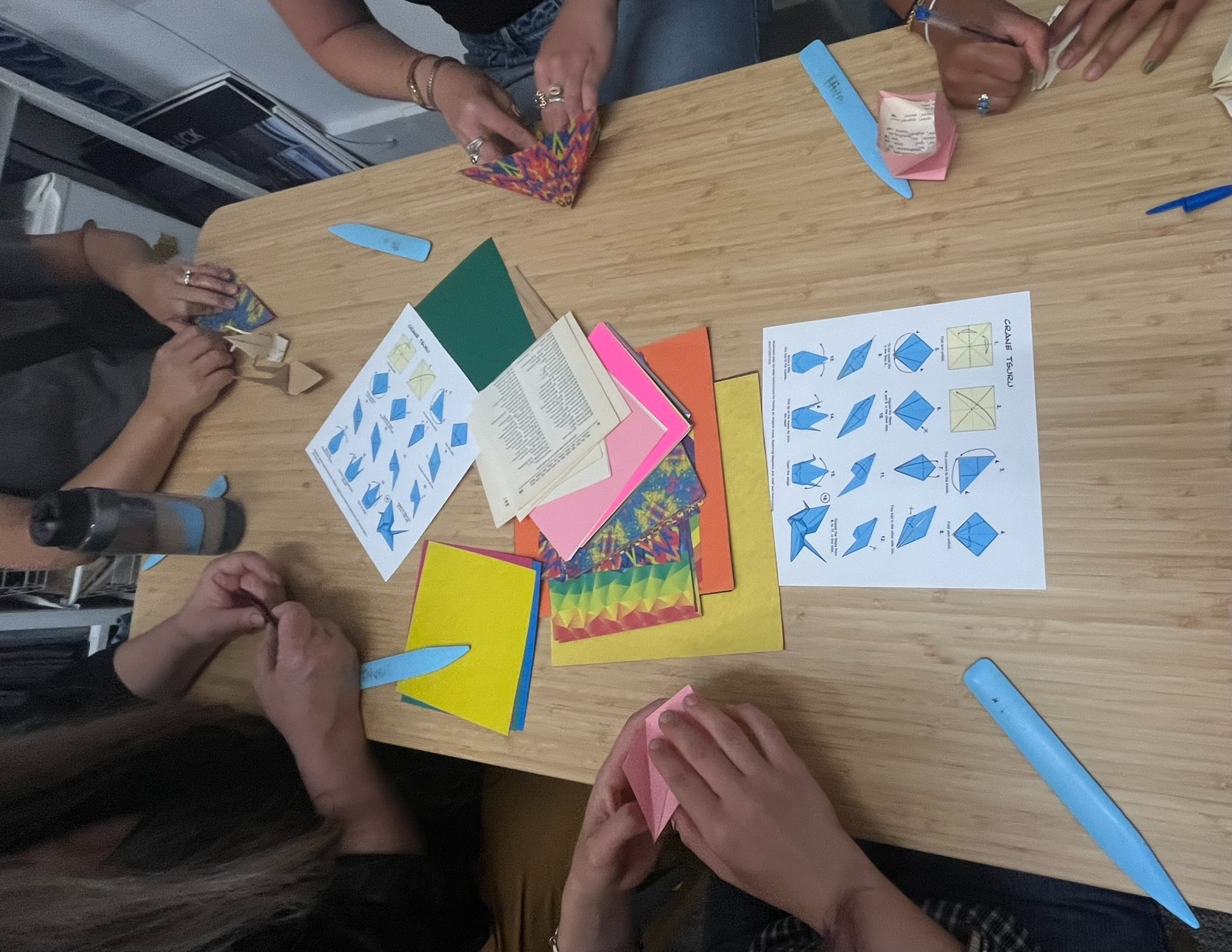
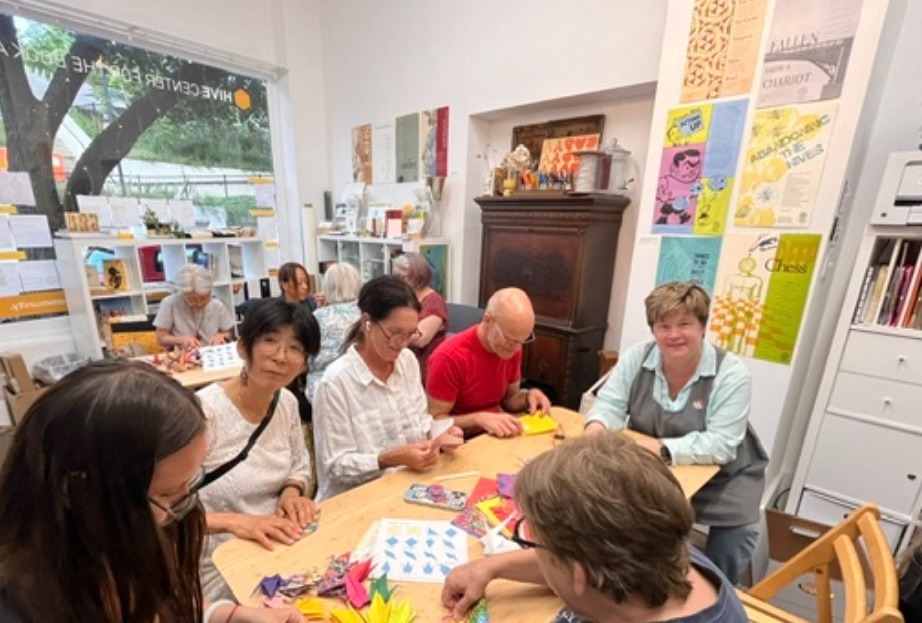
Since my last post, I facilitated another workshop! This was a workshop for EASPA in collaboration with The Japanese Cultural Center of Chicago and The Osaka Committee of Chicago Sister Cities International at the Hive Center For The Book Arts. The cranes produced from this workshop, as well as many others throughout Chicago, will be installed together in a cultural institution such as the The Obama Center (omg!) or the Historic Water Tower in 2027. This workshop was super well attended and cultivated many interesting conversations about cultural exchange both locally and across countries. It was an incredible experience leading a workshop within such a large scale project across so many organizations, and I’m so excited to see the installation next year!


TEAACH (Teaching Equitable Asian American Community History)
Now that we are through July and most of EASPA’s cultural programming for the summer is complete, I’ve been able to dial in on the TEAACH act more extensively. This includes creating an educational toolkit template for EASPA to utilize in the future, a calendar of Asian American historical events and holidays, as well as an art specific resource! The art specific educational resource is a catalogue of Asian and Asian American Artists paired with related TEAACH Act resources and requirements. The first two pages are attached below!


I’ve been having so much fun putting this resource together; I really enjoy drawing connections between historical events and artists! It’s especially exciting to organize this information in a resource that can be utilized in both arts and social studies contexts. I recently had a great conversation with Melissa Molitor, the Founding Director of EASPA, about the importance of not only teaching Asian American history but also helping people understand how it connects to current questions of identity, belonging, and social and political issues. An example of this is how the United States vs. Wong Kim Ark case serves as the foundational legal precedent for birthright citizenship in the United States. Wong Kim Ark’s story is important not only because it is part of America’s past but because it is a big part of America’s present. On that note I want to shout out Karen Hu, another 2026 Maharam Fellow who’s working directly to support immigrants with Alliance to Mobilize Our Resistance (AMOR).
My favorite quality of art is its ability to mediate and navigate multiple theories, histories, and modes of being at once. This conversation with Melissa about past and present, external experiences and internal thought reminded me of what I love most about art and how it can be helpful in historical and educational contexts. I’m excited to provide more perspectives on how AAPI history can be taught and understood through this resource!!
I also want to note that I took an amazing course at RISD last semester called The Kinship of Repair: Asian/Asian American Art of Collaboration taught by Jung Joon Lee that has not only informed how I approach the community and research work I’ve engaged with this summer but also given me many great Asian American artists to add to this resource so thank you Joon!!
I will spend my last week with EASPA completing the educational resources mentioned in this post!!
You must be logged in to post a comment.